Table of Contents
The challenges of the 21st century demand both the demand for boosted self-awareness, and the life-affirming interconnectedness with family, job, close friends, and culture in its entirety. Granted, because we are all really various people, one's requirements for connectedness at job may pale in contrast to the links with culture generally.
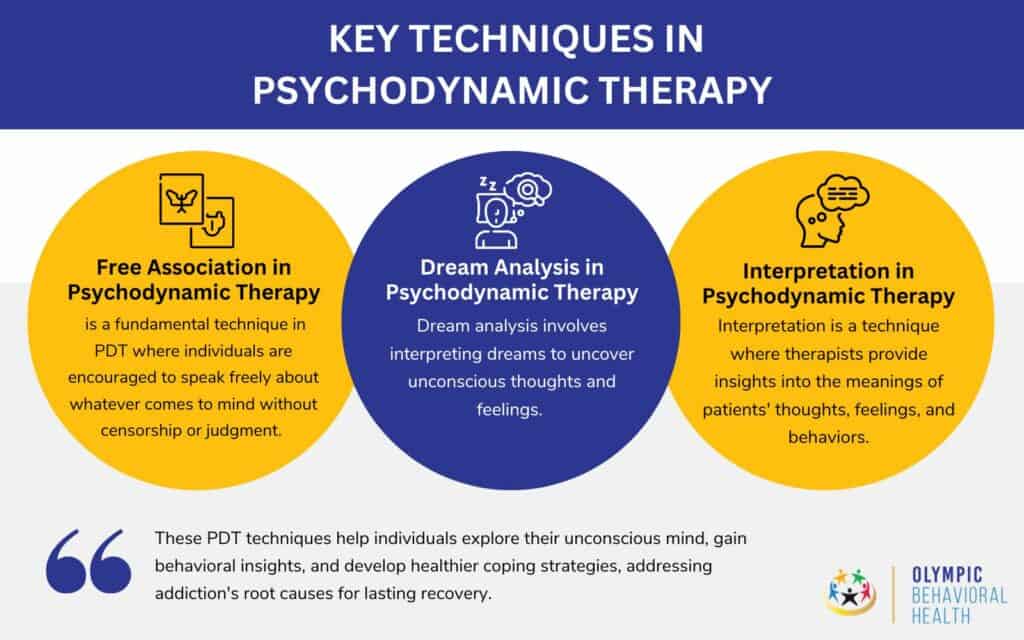
Over the previous numerous years, research study has revealed that it is as reliable or more effective than behavior modifications such as cognitive-behavioral therapy (CBT). Psychoanalytic practitioners stress that the treatments which attend to many psychological health and wellness problems by exploring unconscious problems are specifically reliable for those experiencing several individual, monetary, and social stress factors.
The theories of deepness psychology concern the entirety of human experience, not simply those with diagnosed mental wellness disorders. The academic frameworks of deepness psychology hold firmly to the value of discovering the subconscious and bringing it into mindful recognition. We are all part of a world in which we need to really feel connected with the workplace, community, and society in which we live.
Two of these, the character and the anima/animus, are relational; the character associates with the external world, and the anima/animus to the interior world. The ego, which is primarily body-based and might be understood as the executive component of the character, stands together with the shadow, and these two are to do with our identification.
Transforming Traumatic Memory Networks

A person may think that to be assertive is to be selfish; so he goes with life being pressed around by others and deep down fuming with resentment, which in turn makes him feel guilty. In this case, his possibility for assertiveness and his animosity both create part of his shadow.
It might be practical to think about the shadow in a vertical means. On top is the individual shadow it may feel rather black, formless and underdeveloped as well as unwanted and disowned. However, as we have actually seen, whilst it may seem like a cess-pit it can likewise be a treasure chest.
Culturally Informed Trauma Healing
This, like the individual darkness, is family member in that it will certainly be in part culturally figured out. It is composed of that which opposes our aware, shared and cumulative worths.
The issue of wickedness is one that Jung explored via his communication with the Dominican, Fr Victor White, and through his writings, particularly "Response to Work". It is a big topic which is beyond the range of this introduction. Exactly how is the shadow run into? Generally in estimate onto some various other individual/family/group etc.
I might start to observe that a lot of other individuals are instead greedy. And I might start to really feel censorious or judgmental about their greed. But, with good luck, it may dawn on me that, what I am doing not like in others is actually something with which I battle within myself.
What are a few of the disowned elements of the psychosomatic unity that we call a person? The body is an excellent area to start. Its form is bothersome for some people, who do not really feel physically joined-up; others dislike or dislike their form and go to alarming sizes to alter it; others really feel quite disembodied.
Physical Approaches in Depression therapy
After that there are sexuality and sex and their coming with stress and anxieties and pressures. In terms of human development, as soon as infants can experience, enjoy and live in their bodies, they can then find out, with their mommy's aid, just how to translate sensations right into impacts. As an example, "butterflies" in the tummy can indicate "I am nervous/feeling shy/afraid of that authority number etc".
Lots of individuals who look for treatment come with a whole number of emotions secured behind a defensive wall of armouring, which avoids distance with themselves and others, real intimacy and problem. Positive and downsides feelings are forecasted onto those around them, and with the estimate goes the capacity to assume plainly about situations and partnerships.
However it omits shame; all of us often tend to really feel ashamed of our shadow, some cripplingly so. In the very early chapters of his autobiography, Jung makes frequent reference to his mommy's usage of shame as a method of discipline. However neither Freud nor Jung paid much attention to pity, although they both endured considerably from its results.
For the darkness to emerge without getting rid of the ego with the hazardous effects of pity, we each require a different relational and emotional setting; evaluation, psychotherapy, counselling every one of these deal such an environment in various methods. The therapist supplies consistent favorable regard, revealed partially with a dedication to dependability, connection and the desire to share his/her understanding of the client's internal and external globe with the client.
Culturally Sensitive Trauma Treatment
The client starts to rely on the specialist; and this trust fund deepens when darkness elements of the patient entered into the restorative partnership, where they are approved with concern and efforts at understanding. If all goes well sufficient, they are not subjected yet again to displeasure, shaming or rejection, and the power which is locked within them is launched.
This procedure, the assimilation of the darkness, leads to self-acceptance and self-forgiveness. Complaint and blame give method to the taking of obligation and attempts at sorting-out what belongs to whom. A tough conscience, which has a tendency to be self- and other-punitive can kick back, and personal values can be embeded in counterpoint to collective principles.
The trickster is best represented, maybe, by the figure of Hermes, who offered Pandora ('the all-gifted one') audacity and shrewd. In Western culture it is the wolf that brings us shut to the world of shadow at its more animalistic degree. De Vries (1984) points out the stereotypical qualities of the wolf: untamed nature, fertility, desire, cruelty, murderousness, avarice; "the wicked, melancholic hungry" that can take property of more humane characteristics.

Navigation
Latest Posts
Treating Immigrants Through Culturally Informed Therapy
IFS Therapy in Multilingual Therapy
Scientific Foundation of Plant-Based Healing in Santa Fe, NM